Wallscope Wallscope is a Scottish-based company specialising in semantic technology, strategic storytelling, and civic innovation. We help organisations transform complex information into clear, accessible knowledge — enabling smarter decisions, stronger engagement, and better public outcomes.
Rooted in Scotland’s heritage of public value and forward-thinking design, we work across sectors to enhance data interoperability, clarify messaging, and bridge the gap between technical systems and human understanding. Whether supporting public service reform, cultural insight platforms, or digital transformation initiatives, our tools and expertise reveal meaning beneath complexity.
At Wallscope, we don’t just process data — we give it context, connection, and purpose.
Most organisations do not lack information. They have reports, documents, dashboards, emails, meeting notes, policies, spreadsheets, systems and databases…
Yet the same questions keep reappearing:
Why was this decision made?
Who approved it?
What evidence supported it?
Why did we choose this option rather than another?
What did we learn last time?
Where is that information stored?
The problem is rarely a lack of information, but that understanding becomes fragmented.
Information Is Not Understanding
Information exists in many places:
A report may contain evidence
A meeting may contain discussion
An email may contain a key decision
A document may contain an approval
A dashboard may contain performance data
Individually, each has value. Collectively, they often fail to tell the story. Without context, organisations are left with fragments rather than understanding.
The Cost of Lost Understanding
When understanding is lost, organisations experience familiar symptoms:
Decisions are revisited repeatedly
Work is duplicated
Lessons must be rediscovered
Knowledge becomes dependent on individuals
New staff struggle to understand historical decisions
Governance becomes difficult to demonstrate.
Many organisations lose reasoning before they lose knowledge. People may remember what was decided, but few remember why.
Wallscope’s Technical Director Ian Allaway explains how these issues are encountered in practice: “Across many organisations we’ve worked with, siloed data creates significant challenges for decision-making and organisational efficiency. Valuable information is often held in separate teams, systems and databases, with limited visibility of what data exists, where it is held, or how it can be used. This fragmentation makes it difficult to bring the right information together, resulting in duplicated effort, missed opportunities and decisions made without the full context of the available evidence.“
AI Makes This More Visible
Artificial Intelligence changes the scale of the challenge. AI can help organisations find information, analyse documents and generate answers. However, it cannot recover understanding that was never preserved. If the evidence, assumptions, rationale and decisions were never connected, AI simply encounters the same fragmentation that people do.
In many cases, AI does not create organisational capability. It reveals whether that capability already exists.
From Information to Organisational Memory
Organisational memory is not a document repository. It is the ability to preserve and reuse understanding over time. It connects the elements that matter:
When these elements remain connected, organisations can reconstruct decisions, demonstrate accountability, learn from experience and improve future judgement.
The Next Competitive Advantage
For many years, organisations focused on collecting information. Today, information is abundant, and the emerging challenge is preserving understanding.
As AI becomes more capable, organisations that can retain context, evidence, rationale and learning may gain an enduring advantage.
VeriNote is being developed around this idea: helping organisations preserve and reuse understanding by connecting evidence, context, decisions and learning within a structured organisational memory system.
VeriNote is a platform created by Wallscope to help organisations preserve, connect and reuse organisational understanding over time.
Inspired by Veritas, the Latin word for truth, VeriNote exists to help organisations move beyond simply storing information and begin preserving the context, evidence, reasoning and decisions that give information its meaning.
As organisations adopt AI, governance frameworks and increasingly complex digital ecosystems, the challenge is no longer finding information. The challenge is understanding:
What evidence was used?
Why was a decision made?
Who contributed?
What assumptions were considered?
What was learned?
VeriNote is designed to help answer those questions.
More Than Notes
Traditional note-taking tools capture information. VeriNote is intended to help capture understanding.
VeriNote may connect:
Questions
Evidence
Observations
Interpretations
Decisions
Outcomes
Learning
Together these elements help create a traceable organisational memory that can be revisited, challenged, expanded and reused over time.
Organisational Memory for the AI Era
As AI systems become increasingly capable, organisations face a new challenge.
AI can generate answers, but organisations remain accountable for the decisions they make.
VeriNote supports an evidence-led approach to organisational understanding by helping preserve:
Context
Authority
Relevance
Governance
These principles support the development of shared understanding and decision readiness.
Connected, Not Replaced
VeriNote is not intended to replace systems of record. Documents, databases, case management systems, CRMs and collaboration tools remain authoritative sources.
Instead, VeriNote acts as connective tissue between sources, helping people understand relationships, evidence and decisions across organisational boundaries.
Organisational Memory is the capability to preserve and reuse evidence, reasoning, decisions, outcomes and learning over time.
Many organisations retain documents and data yet still lose understanding. Important context disappears. Assumptions are forgotten. Decisions cannot be explained. Lessons are repeatedly relearned.
In many cases, organisations lose reasoning before they lose knowledge.
Why Organisational Memory Matters
Strong organisational memory helps organisations:
Learn from experience
Reduce duplication
Retain critical knowledge
Improve continuity during staff changes
Strengthen governance and accountability
The Memory Chain
Wallscope views organisational learning as a connected process:
When these relationships are preserved, understanding compounds rather than resets.
Looking Forward
As AI becomes more capable, preserving human understanding becomes increasingly important.
Organisational Memory helps ensure that future decisions benefit from past experience.
Building Organisational Memory with VeriNote
By connecting questions, evidence, observations, interpretations, decisions, outcomes and learning, VeriNote helps organisations accumulate capability rather than repeatedly rediscovering it.
Turning fragmented information into connected knowledge people can trust.
Organisations rarely lack information. More often, they struggle to develop a shared understanding of what that information means, why it matters and how it should inform decisions.
Shared Understanding is the ability for people, teams and partners to develop a common view of context, evidence, priorities and objectives. It allows individuals with different perspectives, responsibilities and expertise to work towards common outcomes while remaining aligned on purpose and direction.
Without shared understanding, organisations experience duplication, miscommunication, conflicting priorities and uncertainty. Decisions become slower, confidence decreases and learning becomes fragmented.
Why It Matters
Shared Understanding helps organisations:
Align people around common goals
Connect evidence with decision making
Reduce misunderstanding and duplication
Improve collaboration across organisational boundaries
Create stronger foundations for governance and accountability
The Wallscope Perspective
At Wallscope, Shared Understanding is the foundation of organisational capability.
Data creates context.
Context creates understanding.
Understanding creates confidence.
Confidence enables better decisions.
Those decisions become part of organisational memory.
Decision Readiness is the state of having sufficient understanding, evidence, authority and confidence to make a decision. Decision Readiness is about Making better decisions with confidence.
Most organisations focus on gathering information. Far fewer focus on ensuring they are ready to make decisions.
Decision Readiness recognises that good decisions rely on more than data alone.
They require context, evidence, ownership, accountability and an understanding of potential consequences.
Key Components
Context Understanding the environment, history and circumstances surrounding a decision.
Evidence Access to trustworthy information that supports decision making.
Authority Clarity regarding who can make decisions and who is accountable.
Governance Processes that ensure decisions are transparent, explainable and aligned with organisational objectives.
Why It Matters
Decision Readiness helps organisations:
Improve confidence in decisions
Reduce uncertainty and risk
Strengthen accountability
Improve collaboration
Prepare for AI-supported decision making
The goal is not simply to make decisions faster, but to make decisions better.
VeriNote Goal
The goal of VeriNote is simple. Preserve understanding so future judgement improves.
By connecting questions, evidence, interpretation, decisions, outcomes and learning, VeriNote helps organisations accumulate capability rather than repeatedly rediscovering it.
Turning fragmented information into connected knowledge people can trust.
Why Understanding May Become More Valuable Than Intelligence
Creating fairer futures starts with shared understanding — connecting data, people and action.
This is the sixth and final article in a series exploring capability, understanding, purpose, context and the human role in an age of AI.
We Have Spoken About Capability
Over the course of this series I have explored three stories.
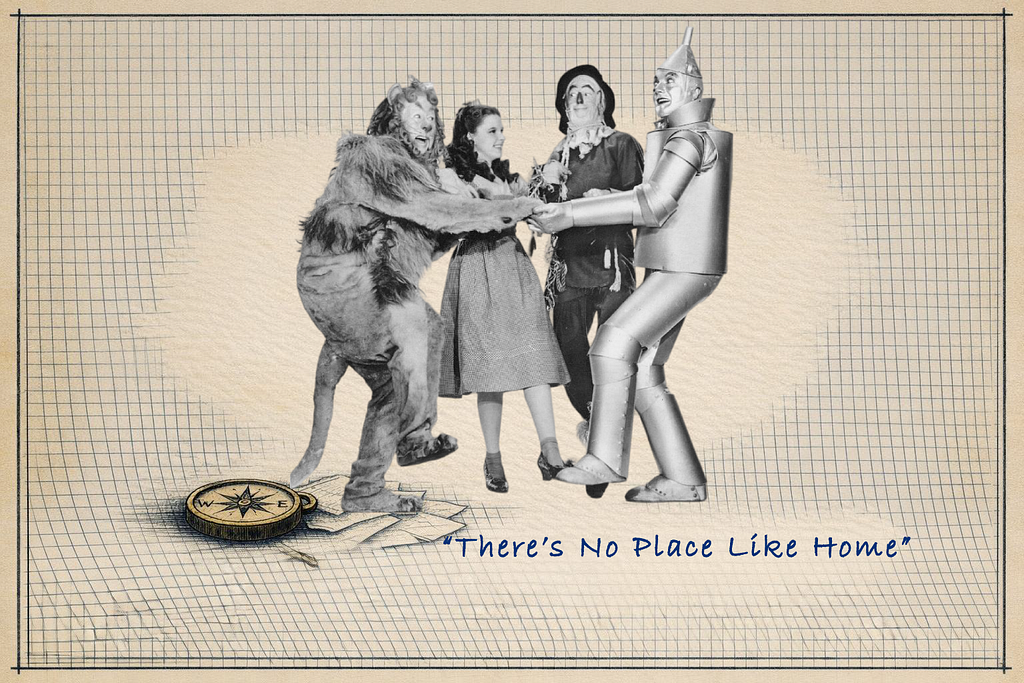
The Wizard of Oz reminded us not to mistake capability for wisdom.
King Lear reminded us that information is not the same as understanding.
Gulliver’s Travels reminded us that innovation is not the same as purpose.
Along the way we considered another question:
What is my role?
And we explored the importance of people, organisations, places and context.
Each article approached the challenge from a different direction.
Yet they all point towards what I believe may become one of the defining challenges of the coming decade.
Not intelligence.
Understanding.
The Missing Layer
For much of the last twenty years we have focused on improving information.
Better data.
Better systems.
Better connectivity.
Better interoperability.
Better reporting.
More recently our attention has shifted towards action.
Automation.
Agents.
Decision support.
Autonomous systems.
The ability to do things.
What often receives less attention is the layer that sits between them.
Shared understanding is the bridge between information and action. In an age of abundant data and increasingly capable AI, understanding may be our most valuable capability.
Data alone does not produce understanding.
Action without understanding can produce unintended consequences.
Understanding is the bridge.
Shared Understanding Is Different
It is important to be clear about what I mean.
Shared understanding is not the same as agreement.
Nor is it the same as uniformity.
People can disagree and still possess shared understanding.
Different organisations can hold different responsibilities and still possess shared understanding.
Different communities can pursue different priorities and still possess shared understanding.
Shared understanding means that people recognise:
the same context,
the same relationships,
the same constraints,
the same opportunities,
even when their perspectives differ.
Without this, coordinated action becomes difficult.
A Reflection
Perhaps the opposite of shared understanding is not disagreement.
Perhaps it is fragmentation.
The Challenge of Modern Organisations
Most contemporary challenges cross organisational boundaries.
Poverty.
Health.
Housing.
Education.
Employment.
Climate.
Community wellbeing.
No single organisation owns these problems.
No single dataset explains them.
No single perspective resolves them.
The challenge therefore becomes:
How do multiple actors develop a sufficiently shared understanding to act together?
This is where information, context and relationships become as important as technology.
Connecting Fragments
Throughout my work I have encountered similar patterns in very different environments.
Universities.
Communities.
Health.
Public services.
Digital transformation.
Information management.
Communications.
Storytelling.
At first glance these appear very different disciplines.
Yet they often revolve around the same challenge.
Information exists in fragments.
Knowledge exists in fragments.
Experience exists in fragments.
The task is connecting those fragments in ways that allow people to make sense of reality together.
Stories, Systems and Understanding
One of the observations that increasingly strikes me is that understanding emerges in many different forms.
Stories create understanding.
Conversations create understanding.
Data creates understanding.
Research creates understanding.
Communities create understanding.
None is sufficient on its own.
We often behave as though information and understanding are interchangeable.
They are not.
A spreadsheet is not understanding.
A report is not understanding.
A dashboard is not understanding.
An AI-generated summary is not understanding.
Each may contribute to understanding.
None guarantees it.
The Human Contribution
Throughout this series I have repeatedly returned to the human role.
This is because understanding remains deeply human.
Humans bring:
meaning,
context,
experience,
values,
purpose,
judgement.
We ask:
What matters?
Why does it matter?
For whom?
What are the consequences?
What trade-offs are acceptable?
Increasingly capable systems do not remove these questions.
If anything, they make them more important.
Understanding Before Action
One lesson I have observed repeatedly is that organisations are often eager to move directly from information to action.
It is understandable.
Action feels productive.
Action creates momentum.
Action demonstrates progress.
But action disconnected from understanding is risky.
The challenge is rarely:
What should we do?
The more important question is often:
What are we actually looking at?
Or perhaps:
What are we failing to see?
A Question Worth Holding
If AI makes action easier, does understanding become more important?
Perhaps This Has Always Been the Challenge
The more I reflect on it, the more I think these are not new questions.
They are human questions.
They appear in literature, philosophy, public services, business and everyday life.
The Wizard appeared powerful but lacked wisdom.
Lear possessed information but lacked understanding.
The inventors of Lagado possessed innovation but lacked purpose.
Different stories.
The same lesson.
Capability.
Understanding.
Purpose.
Each depends upon the others.
A Future Worth Building
Artificial Intelligence will continue to evolve.
Infrastructure will continue to improve.
Agents will become more capable.
Some decisions will become increasingly automated.
None of this is likely to stop.
The more interesting question is what kind of society emerges around these capabilities.
Will we use them to deepen understanding?
Will we use them to connect people and communities?
Will we use them to improve outcomes?
Or will we simply increase the speed at which we make the same mistakes?
The Real Bottleneck
Perhaps the bottleneck of the next decade will not be intelligence.
It may not even be data.
It may be our ability to develop shared understanding:
between people,
between organisations,
between communities,
and increasingly between people and intelligent systems.
The future may depend less on what our technologies know and more on how well we understand one another.
One Final Question
Throughout this series I have asked questions rather than offered answers.
Perhaps that is appropriate.
Because the most important question ultimately belongs to each of us.
As intelligence becomes increasingly abundant.
As capability becomes increasingly available.
As agency becomes increasingly automated.
What is my role?
What should I learn?
What responsibilities remain uniquely human?
And what future am I helping to create?
Closing Thought
Humans create meaning. Stories create connection. Organisations create structure. Technology creates capability. Shared understanding connects them all.
And in an age of abundant intelligence, that connection may become the most valuable thing we possess.
Epilogue
The Wizard of Oz asked:
What lies behind the curtain?
King Lear asked:
Do we understand what matters?
Gulliver’s Travels asked:
Why are we doing this?
Perhaps the AI age asks one final question:
How do we create enough shared understanding for people, organisations and intelligent systems to build a better future together?
That may be the most important question of all.
About the author
David Eccles is a co-founder of Wallscope, based in Edinburgh, Scotland. He writes about AI, organisational knowledge, interoperability, shared context and public-sector transformation, exploring how organisations can turn fragmented information into actionable knowledge.
This is the fifth in a series of reflections exploring capability, understanding, purpose, context and the human role in an age of AI.
The World Does Not Arrive in Neat Categories
In previous articles, I explored three questions.
The Wizard of Oz asked:
What lies behind the curtain?
King Lear asked:
Do we understand what matters?
Gulliver’s Travels asked:
Why are we doing this?
Together they led me towards a different question:
How do people develop a shared understanding of the world they are acting upon?
The more I think about it, the more I believe this is one of the defining challenges of our time.
Because the world refuses to fit neatly into the boxes we create for it.
We Like Simplicity
Organisations love boundaries.
Departments.
Budgets.
Systems.
Services.
Projects.
Responsibilities.
These structures are necessary.
They help us organise effort and allocate resources.
Yet people’s lives rarely follow the same structure.
A family experiencing poverty may simultaneously interact with:
● schools,
● health services,
● housing services,
● employers,
● community groups,
● transport systems,
● welfare support.
Each organisation sees part of the picture.
Nobody automatically sees the whole picture.
A Reflection
The challenge is rarely a lack of information.
The challenge is that information exists in fragments.
Four Things Keep Appearing
Across different projects, sectors and communities, I keep seeing the same four elements.
People
Individuals.
Families.
Citizens.
Practitioners.
Communities.
Organisations
Councils.
Businesses.
Health services.
Charities.
Government agencies.
Places
Neighbourhoods.
Towns.
Cities.
Rural communities.
Regions.
Context
History.
Relationships.
Needs.
Aspirations.
Services.
Opportunities.
Constraints.
These four elements constantly interact.
None makes sense in isolation.
Place Matters More Than We Often Realise
One lesson that repeatedly emerges from public services is the importance of place.
A place is not simply a location on a map.
It brings context.
Consider two households with similar incomes.
One lives in a city with:
● regular public transport,
● nearby services,
● multiple employment opportunities.
The other lives in a rural community with:
● infrequent transport,
● limited childcare,
● longer travel times,
● fewer local opportunities.
The data may appear similar.
The context is entirely different.
Without place, understanding becomes incomplete.
Organisations See Different Realities
Another challenge emerges when organisations attempt to work together.
Each organisation develops its own language.
Its own priorities.
Its own measures.
Its own systems.
Its own view of reality.
This is not a problem.
It is inevitable.
The difficulty comes when collective action is required.
Because coordinated action depends upon coordinated understanding.
A Question Worth Holding
How often are organisations trying to solve the same problem while describing it in completely different ways?
Shared Understanding Is Not Agreement
An important distinction.
Shared understanding does not require everyone to agree.
It does not require organisations to have identical goals.
It does not require people to hold the same opinions.
It requires something else.
It requires people to understand one another sufficiently well that they can act together.
This is true for:
● communities,
● organisations,
● partnerships,
● governments,
● and perhaps increasingly, intelligent systems.
The goal is not uniformity.
The goal is coherence.
Health, Communities and Complexity
Throughout my work I have encountered similar challenges in very different domains.
Health data.
Community planning.
Poverty reduction.
Digital transformation.
Education.
Sports performance.
At first glance, these appear to be separate worlds.
Yet beneath the surface they often share a common challenge.
Different actors hold different pieces of the same puzzle.
The difficulty is not merely collecting information.
The difficulty is connecting information in ways that create understanding.
The Missing Layer
For many years we focused heavily on data.
Data quality.
Standards.
Interoperability.
Integration.
These remain important.
Today we are increasingly focused on AI and automation.
Capability.
Agents.
Decision support.
Action.
But there is something sitting between data and action.
Something that often receives far less attention.
Understanding.
Not information.
Not technology.
Understanding.
The ability to make sense of reality together.
A Reflection
Perhaps the most important question is not:
What information do we have?
But:
What understanding are we creating?
A Different Way of Thinking
Perhaps understanding begins with a simple question:
What relationships matter?
People are connected to organisations.
Organisations operate in places.
Places shape experiences.
Experiences create context.
Context influences decisions.
Decisions create outcomes.
The challenge is not simply collecting facts.
It is understanding relationships.
The more complex the world becomes, the more important those relationships become.
Building Shared Understanding
Shared understanding is rarely delivered.
It is built.
Through:
● conversation,
● participation,
● evidence,
● experience,
● stories,
● data,
● reflection.
Each contributes something different.
Data helps us see patterns.
Stories help us understand experiences.
Context helps us interpret meaning.
Together they allow us to develop richer pictures of reality.
Looking Ahead
If people, organisations, places and context help create understanding, then another question naturally follows.
How do we maintain that understanding?
How do we share it?
How do we build it over time?
And perhaps most importantly:
What happens when some of the participants are no longer human?
That question takes us to the final article in this series.
One about shared understanding itself.
And why it may become the scarcest resource in an age of increasingly abundant intelligence.
Final Reflection
We often talk about AI transforming how we work.
Perhaps the deeper transformation will be in how we understand.
Because before people, organisations and intelligent systems can act together, they must first learn how to see the world together.
Next in the series:
Shared Understanding in an Age of AI
Why Understanding May Become More Valuable Than Intelligence
About the author
David Eccles is a co-founder of Wallscope, based in Edinburgh, Scotland. He writes about AI, organisational knowledge, interoperability, shared context and public-sector transformation, exploring how organisations can turn fragmented information into actionable knowledge.
Wallscope publishes articles on Medium exploring AI, knowledge management, knowledge graphs, interoperability, digital transformation, public value, in Scotland and beyond.
Wallscope – Medium Insights from the Wallscope team on AI, open standards, interoperability, information management and building fairer digital futures across Scotland’s public sector and communities. – Medium
Why Understanding May Become More Valuable Than IntelligenceCreating fairer futures starts with shared understanding — connecting data, people and action.This is the sixth and final article in a series exploring capability, understanding, purpose, context and the human role in an age […]
Building Shared Understanding in a Complex WorldContext chages everythingThis is the fifth in a series of reflections exploring capability, understanding, purpose, context and the human role in an age of AI.The World Does Not Arrive in Neat CategoriesIn previous articles, I explored three […]
Human Purpose in an Age of Increasingly Capable AIQuestions matterThe Question I Keep Returning ToAfter all the discussions about AI, agents, automation and innovation, I find myself returning to a much simpler question.Not:What will AI become?But:What will we become?Every week brings new […]
Why Data Is Not the Same as UnderstandingThis is the second in a series of reflections exploring capability, understanding, purpose, context and the human role in an age of AI.We Have Never Had More InformationWe live in an age of abundance.More data.More dashboards.More reports.More […]
What The Wizard of Oz Can Teach Us About AI, Capability and the Questions We Should Still Be Asking OurselvesThis is the first in a series of reflections exploring capability, understanding, purpose, context and the human role in an age of AI.Three Stories Have Been On My Mind RecentlyThree […]
For organisations needing to navigate ever-increasing amounts of information, ontologies are an extremely valuable tool. They allow a machine to work more like a human mind when classifying information, allowing you to navigate it smoothly. Essentially the ontology is the architecture that maps and […]