Articles on knowledge management, information architecture, organisational learning, digital knowledge, and how people and technology work together to create value from information.
Most conversations about AI focus on capability — what a model can do, how accurate it is, or how much work it might automate. However, one of the most revealing things we’ve seen is that AI often behaves like an organisational diagnostic long before it becomes an automation tool.
AI reveals these cracks because it exposes parts of the organisation that were never fully captured or maintained. A business rule that only exists in someone’s head, a process held together by a workaround, or a decision whose rationale was never written down — all of these technically exist, but the context that makes them understandable and reusable has disappeared. These issues rarely appear in presentations or capability demos, but they can determine whether AI creates lasting value.
As organisations introduce AI, it becomes easier to execute tasks and generate outputs. What doesn’t automatically improve is shared understanding. Teams still need clarity about objectives, governance still needs to function, evidence still needs to be trusted, and learning still needs to be retained.
In that sense, AI can increase capacity far faster than it increases capability. That may explain why organisations using similar technologies often achieve very different outcomes. Many AI initiatives end up exposing the same underlying weaknesses: unclear ownership, missing context, fragile governance, fragmented understanding, and learning that isn’t preserved. The cracks were already there; AI simply makes them harder to ignore.
Once those cracks have been exposed, organisations can patch them up and move on, or treat them as indicators of where understanding is breaking down and where decisions are being made without the appropriate context. In this sense, identifying the gaps is an opportunity to fix the foundations that shape how decisions are made.
Ultimately, the cracks point to the absence of organisational memory. Without connected evidence, rationale and learning, AI meets the same fragmentation that people do. With those connections in place, it can navigate understanding rather than disconnected information.
That’s why we’re building VeriNote: to help organisations strengthen the foundations that AI depends on by connecting evidence, context, decisions and learning into a durable organisational memory.
VeriNote connects evidence, decisions and learning within a single, trusted system. The features below show how it helps teams to work more transparently, make better‑informed decisions and retain understanding over time.
Evidence Management
Bring together evidence that is often scattered across documents, reports, emails, datasets and operational systems.
By connecting evidence to decisions, outcomes and learning, teams can understand not only what information exists, but how it has been used and what conclusions it supported.
This helps to reduce duplicated effort, improve transparency and ensure that important knowledge remains accessible over time.
Decision Traceability
Preserve the reasoning behind important decisions.
Rather than simply recording outcomes, teams can retain the evidence, assumptions, discussions and approvals that influenced a decision. This helps teams understand why choices were made, supports governance and reduces the risk of repeatedly revisiting the same questions.
Shared Understanding
Connect questions, evidence, observations and stakeholder perspectives in a common view of a challenge or opportunity.
By bringing different viewpoints together, organisations can reduce misunderstandings, align decision-making and build greater confidence in the actions they take.
Organisational Memory
Preserve understanding beyond individual projects, teams and personnel changes.
Context, evidence, decisions, learning and governance records remain connected and available to future teams. This allows organisations to build upon previous experience rather than repeatedly rediscovering the same lessons.
Workgroups & Collaboration
Get access to structured collaborative spaces where teams, partnerships and communities of practice can work together around shared objectives.
By connecting people, evidence and decisions in a common environment, organisations can improve communication, strengthen accountability and maintain continuity when teams change.
Blueprints
Use Blueprints to provide repeatable approaches for governance, service improvement, assessment and organisational development.
This helps organisations establish consistent ways of working while ensuring that evidence, decisions and learning remain connected throughout the process.
Dashboards & Insights
Transform connected organisational knowledge into accessible insight through dashboards, reports and visualisations.
This helps leaders, teams and stakeholders understand progress, identify patterns and make decisions based on a shared view of evidence and outcomes.
Integrations
Integrate with existing systems rather than replacing them.
Information can be connected from Microsoft 365, business applications, databases, open data platforms and API-enabled services. This helps organisations bring together fragmented information while keeping systems of record authoritative.
Governance & Assurance
Demonstrate ownership, accountability and oversight by connecting evidence, decisions, reviews and outcomes.
This supports governance obligations while making it easier to understand how decisions have been reached and how organisational understanding evolves over time.
AI-Augmented Discovery
Use AI to help people navigate organisational memory by discovering relevant evidence, surfacing connections and identifying related knowledge.
Rather than replacing human judgement, AI helps teams access and apply organisational understanding more effectively.
Why It Matters
Organisations create understanding every day through projects, workshops, research, services, decisions and operations.
Most organisations invest heavily in learning, running courses, workshops, onboarding programmes and professional development activities. Learning platforms often track attendance, completions and assessment scores. Yet the same questions keep appearing:
Didn’t we learn this already?
Haven’t we seen this problem before?
Why are we making the same mistake again?
What did we discover last time?
Perhaps the question is not whether organisations have a learning problem, but whether they sometimes have a memory problem.
Training vs Learning
Traditional learning measurement often focuses on activity and attainment.
Organisational learning requires capturing what happens after and outside structured learning. Did the organisation change? Did decisions improve? Did lessons become part of everyday practice? This is essentially the “why” behind decisions – not just what was decided, but the context, evidence, assumptions and reasoning used at the time.
Learning Happens Everywhere
The challenge is that much of this learning remains trapped inside reports, meeting notes, emails and people’s heads. Some of the most valuable learning never appears inside a formal course. It happens:
during projects
during failures
during incidents or challenges
when assumptions turn out to be wrong
when teams discover a better approach.
Over time the context disappears. For example, a project team might spend six months solving a difficult problem. Two years later, another team encounters the same issue but can’t find why the original decisions were made, so much of the investigation is repeated. Team members move on, projects end, and organisations find themselves learning the same lessons.
The Difference Between Learning And Organisational Learning
An individual can learn something in an afternoon, but for an organisation to learn that understanding needs to survive beyond the individual. It needs to become visible, reusable and connected to future decisions, otherwise learning remains personal rather than organisational.
AI is making information easier to find and generate, so organisational advantage may increasingly depend on preserving the context, reasoning and experience that gives that information meaning.
Why This Matters
As change accelerates, organisations need ways to build and retain understanding over time. The organisations that improve most effectively may not be those that train the largest number of people, but those that can preserve and reuse what they learn. Learning creates value once; remembering enables that value to be applied again.
The challenge is not only generating new learning but ensuring that what has been learned becomes part of the organisation’s collective memory.
VeriNote supports this by bringing together dispersed insights, decisions and evidence into a shared, searchable organisational memory. It helps teams hold onto what they learn and apply it when it matters, keeping lessons visible, reusable and connected to future decisions.
Most organisations do not lack information. They have reports, documents, dashboards, emails, meeting notes, policies, spreadsheets, systems and databases…
Yet the same questions keep reappearing:
Why was this decision made?
Who approved it?
What evidence supported it?
Why did we choose this option rather than another?
What did we learn last time?
Where is that information stored?
The problem is rarely a lack of information, but that understanding becomes fragmented.
Information Is Not Understanding
Information exists in many places:
A report may contain evidence
A meeting may contain discussion
An email may contain a key decision
A document may contain an approval
A dashboard may contain performance data
Individually, each has value. Collectively, they often fail to tell the story. Without context, organisations are left with fragments rather than understanding.
The Cost of Lost Understanding
When understanding is lost, organisations experience familiar symptoms:
Decisions are revisited repeatedly
Work is duplicated
Lessons must be rediscovered
Knowledge becomes dependent on individuals
New staff struggle to understand historical decisions
Governance becomes difficult to demonstrate.
Many organisations lose reasoning before they lose knowledge. People may remember what was decided, but few remember why.
Wallscope’s Technical Director Ian Allaway explains how these issues are encountered in practice: “Across many organisations we’ve worked with, siloed data creates significant challenges for decision-making and organisational efficiency. Valuable information is often held in separate teams, systems and databases, with limited visibility of what data exists, where it is held, or how it can be used. This fragmentation makes it difficult to bring the right information together, resulting in duplicated effort, missed opportunities and decisions made without the full context of the available evidence.“
AI Makes This More Visible
Artificial Intelligence changes the scale of the challenge. AI can help organisations find information, analyse documents and generate answers. However, it cannot recover understanding that was never preserved. If the evidence, assumptions, rationale and decisions were never connected, AI simply encounters the same fragmentation that people do.
In many cases, AI does not create organisational capability. It reveals whether that capability already exists.
From Information to Organisational Memory
Organisational memory is not a document repository. It is the ability to preserve and reuse understanding over time. It connects the elements that matter:
When these elements remain connected, organisations can reconstruct decisions, demonstrate accountability, learn from experience and improve future judgement.
The Next Competitive Advantage
For many years, organisations focused on collecting information. Today, information is abundant, and the emerging challenge is preserving understanding.
As AI becomes more capable, organisations that can retain context, evidence, rationale and learning may gain an enduring advantage.
VeriNote is being developed around this idea: helping organisations preserve and reuse understanding by connecting evidence, context, decisions and learning within a structured organisational memory system.
Why Understanding May Become More Valuable Than Intelligence
Creating fairer futures starts with shared understanding — connecting data, people and action.
This is the sixth and final article in a series exploring capability, understanding, purpose, context and the human role in an age of AI.
We Have Spoken About Capability
Over the course of this series I have explored three stories.
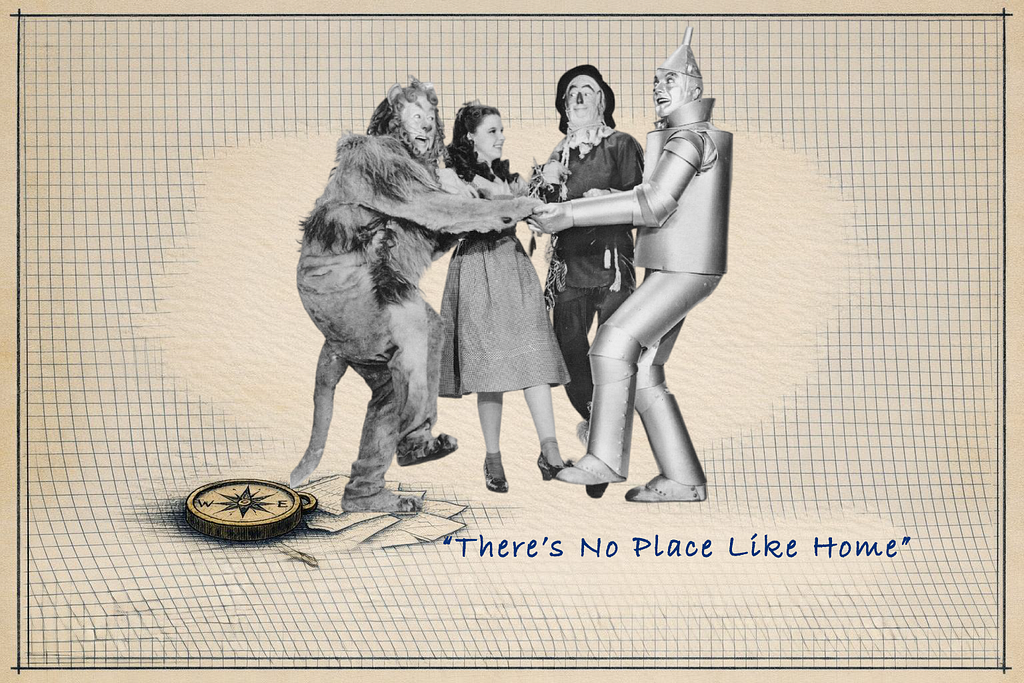
The Wizard of Oz reminded us not to mistake capability for wisdom.
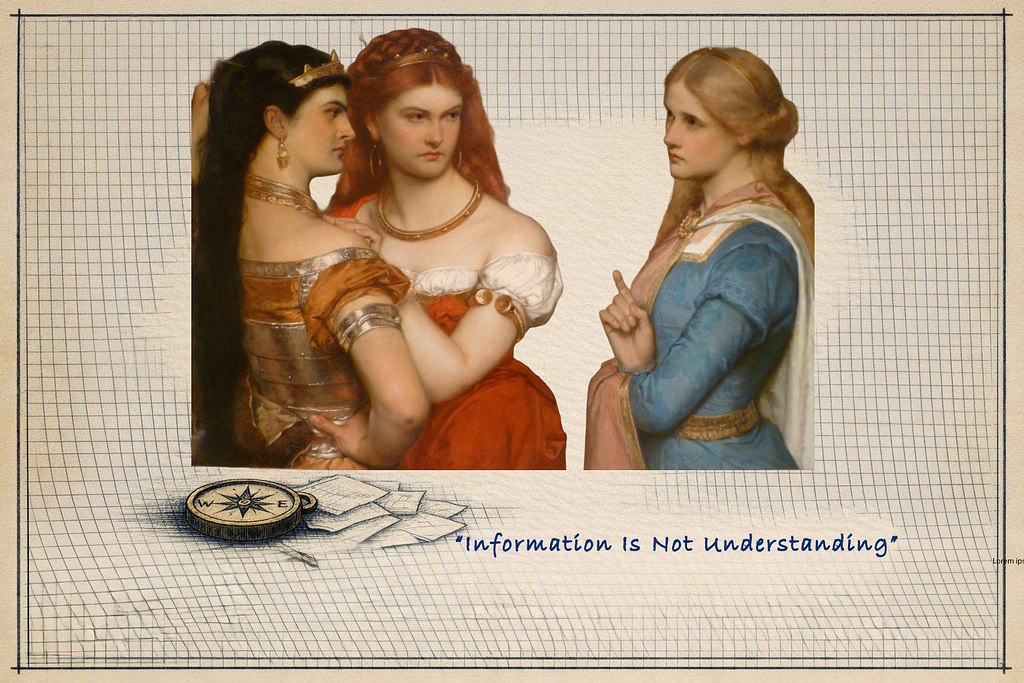
King Lear reminded us that information is not the same as understanding.
Gulliver’s Travels reminded us that innovation is not the same as purpose.
Along the way we considered another question:
What is my role?
And we explored the importance of people, organisations, places and context.
Each article approached the challenge from a different direction.
Yet they all point towards what I believe may become one of the defining challenges of the coming decade.
Not intelligence.
Understanding.
The Missing Layer
For much of the last twenty years we have focused on improving information.
Better data.
Better systems.
Better connectivity.
Better interoperability.
Better reporting.
More recently our attention has shifted towards action.
Automation.
Agents.
Decision support.
Autonomous systems.
The ability to do things.
What often receives less attention is the layer that sits between them.
Shared understanding is the bridge between information and action. In an age of abundant data and increasingly capable AI, understanding may be our most valuable capability.
Data alone does not produce understanding.
Action without understanding can produce unintended consequences.
Understanding is the bridge.
Shared Understanding Is Different
It is important to be clear about what I mean.
Shared understanding is not the same as agreement.
Nor is it the same as uniformity.
People can disagree and still possess shared understanding.
Different organisations can hold different responsibilities and still possess shared understanding.
Different communities can pursue different priorities and still possess shared understanding.
Shared understanding means that people recognise:
the same context,
the same relationships,
the same constraints,
the same opportunities,
even when their perspectives differ.
Without this, coordinated action becomes difficult.
A Reflection
Perhaps the opposite of shared understanding is not disagreement.
Perhaps it is fragmentation.
The Challenge of Modern Organisations
Most contemporary challenges cross organisational boundaries.
Poverty.
Health.
Housing.
Education.
Employment.
Climate.
Community wellbeing.
No single organisation owns these problems.
No single dataset explains them.
No single perspective resolves them.
The challenge therefore becomes:
How do multiple actors develop a sufficiently shared understanding to act together?
This is where information, context and relationships become as important as technology.
Connecting Fragments
Throughout my work I have encountered similar patterns in very different environments.
Universities.
Communities.
Health.
Public services.
Digital transformation.
Information management.
Communications.
Storytelling.
At first glance these appear very different disciplines.
Yet they often revolve around the same challenge.
Information exists in fragments.
Knowledge exists in fragments.
Experience exists in fragments.
The task is connecting those fragments in ways that allow people to make sense of reality together.
Stories, Systems and Understanding
One of the observations that increasingly strikes me is that understanding emerges in many different forms.
Stories create understanding.
Conversations create understanding.
Data creates understanding.
Research creates understanding.
Communities create understanding.
None is sufficient on its own.
We often behave as though information and understanding are interchangeable.
They are not.
A spreadsheet is not understanding.
A report is not understanding.
A dashboard is not understanding.
An AI-generated summary is not understanding.
Each may contribute to understanding.
None guarantees it.
The Human Contribution
Throughout this series I have repeatedly returned to the human role.
This is because understanding remains deeply human.
Humans bring:
meaning,
context,
experience,
values,
purpose,
judgement.
We ask:
What matters?
Why does it matter?
For whom?
What are the consequences?
What trade-offs are acceptable?
Increasingly capable systems do not remove these questions.
If anything, they make them more important.
Understanding Before Action
One lesson I have observed repeatedly is that organisations are often eager to move directly from information to action.
It is understandable.
Action feels productive.
Action creates momentum.
Action demonstrates progress.
But action disconnected from understanding is risky.
The challenge is rarely:
What should we do?
The more important question is often:
What are we actually looking at?
Or perhaps:
What are we failing to see?
A Question Worth Holding
If AI makes action easier, does understanding become more important?
Perhaps This Has Always Been the Challenge
The more I reflect on it, the more I think these are not new questions.
They are human questions.
They appear in literature, philosophy, public services, business and everyday life.
The Wizard appeared powerful but lacked wisdom.
Lear possessed information but lacked understanding.
The inventors of Lagado possessed innovation but lacked purpose.
Different stories.
The same lesson.
Capability.
Understanding.
Purpose.
Each depends upon the others.
A Future Worth Building
Artificial Intelligence will continue to evolve.
Infrastructure will continue to improve.
Agents will become more capable.
Some decisions will become increasingly automated.
None of this is likely to stop.
The more interesting question is what kind of society emerges around these capabilities.
Will we use them to deepen understanding?
Will we use them to connect people and communities?
Will we use them to improve outcomes?
Or will we simply increase the speed at which we make the same mistakes?
The Real Bottleneck
Perhaps the bottleneck of the next decade will not be intelligence.
It may not even be data.
It may be our ability to develop shared understanding:
between people,
between organisations,
between communities,
and increasingly between people and intelligent systems.
The future may depend less on what our technologies know and more on how well we understand one another.
One Final Question
Throughout this series I have asked questions rather than offered answers.
Perhaps that is appropriate.
Because the most important question ultimately belongs to each of us.
As intelligence becomes increasingly abundant.
As capability becomes increasingly available.
As agency becomes increasingly automated.
What is my role?
What should I learn?
What responsibilities remain uniquely human?
And what future am I helping to create?
Closing Thought
Humans create meaning. Stories create connection. Organisations create structure. Technology creates capability. Shared understanding connects them all.
And in an age of abundant intelligence, that connection may become the most valuable thing we possess.
Epilogue
The Wizard of Oz asked:
What lies behind the curtain?
King Lear asked:
Do we understand what matters?
Gulliver’s Travels asked:
Why are we doing this?
Perhaps the AI age asks one final question:
How do we create enough shared understanding for people, organisations and intelligent systems to build a better future together?
That may be the most important question of all.
About the author
David Eccles is a co-founder of Wallscope, based in Edinburgh, Scotland. He writes about AI, organisational knowledge, interoperability, shared context and public-sector transformation, exploring how organisations can turn fragmented information into actionable knowledge.
This is the fifth in a series of reflections exploring capability, understanding, purpose, context and the human role in an age of AI.
The World Does Not Arrive in Neat Categories
In previous articles, I explored three questions.
The Wizard of Oz asked:
What lies behind the curtain?
King Lear asked:
Do we understand what matters?
Gulliver’s Travels asked:
Why are we doing this?
Together they led me towards a different question:
How do people develop a shared understanding of the world they are acting upon?
The more I think about it, the more I believe this is one of the defining challenges of our time.
Because the world refuses to fit neatly into the boxes we create for it.
We Like Simplicity
Organisations love boundaries.
Departments.
Budgets.
Systems.
Services.
Projects.
Responsibilities.
These structures are necessary.
They help us organise effort and allocate resources.
Yet people’s lives rarely follow the same structure.
A family experiencing poverty may simultaneously interact with:
● schools,
● health services,
● housing services,
● employers,
● community groups,
● transport systems,
● welfare support.
Each organisation sees part of the picture.
Nobody automatically sees the whole picture.
A Reflection
The challenge is rarely a lack of information.
The challenge is that information exists in fragments.
Four Things Keep Appearing
Across different projects, sectors and communities, I keep seeing the same four elements.
People
Individuals.
Families.
Citizens.
Practitioners.
Communities.
Organisations
Councils.
Businesses.
Health services.
Charities.
Government agencies.
Places
Neighbourhoods.
Towns.
Cities.
Rural communities.
Regions.
Context
History.
Relationships.
Needs.
Aspirations.
Services.
Opportunities.
Constraints.
These four elements constantly interact.
None makes sense in isolation.
Place Matters More Than We Often Realise
One lesson that repeatedly emerges from public services is the importance of place.
A place is not simply a location on a map.
It brings context.
Consider two households with similar incomes.
One lives in a city with:
● regular public transport,
● nearby services,
● multiple employment opportunities.
The other lives in a rural community with:
● infrequent transport,
● limited childcare,
● longer travel times,
● fewer local opportunities.
The data may appear similar.
The context is entirely different.
Without place, understanding becomes incomplete.
Organisations See Different Realities
Another challenge emerges when organisations attempt to work together.
Each organisation develops its own language.
Its own priorities.
Its own measures.
Its own systems.
Its own view of reality.
This is not a problem.
It is inevitable.
The difficulty comes when collective action is required.
Because coordinated action depends upon coordinated understanding.
A Question Worth Holding
How often are organisations trying to solve the same problem while describing it in completely different ways?
Shared Understanding Is Not Agreement
An important distinction.
Shared understanding does not require everyone to agree.
It does not require organisations to have identical goals.
It does not require people to hold the same opinions.
It requires something else.
It requires people to understand one another sufficiently well that they can act together.
This is true for:
● communities,
● organisations,
● partnerships,
● governments,
● and perhaps increasingly, intelligent systems.
The goal is not uniformity.
The goal is coherence.
Health, Communities and Complexity
Throughout my work I have encountered similar challenges in very different domains.
Health data.
Community planning.
Poverty reduction.
Digital transformation.
Education.
Sports performance.
At first glance, these appear to be separate worlds.
Yet beneath the surface they often share a common challenge.
Different actors hold different pieces of the same puzzle.
The difficulty is not merely collecting information.
The difficulty is connecting information in ways that create understanding.
The Missing Layer
For many years we focused heavily on data.
Data quality.
Standards.
Interoperability.
Integration.
These remain important.
Today we are increasingly focused on AI and automation.
Capability.
Agents.
Decision support.
Action.
But there is something sitting between data and action.
Something that often receives far less attention.
Understanding.
Not information.
Not technology.
Understanding.
The ability to make sense of reality together.
A Reflection
Perhaps the most important question is not:
What information do we have?
But:
What understanding are we creating?
A Different Way of Thinking
Perhaps understanding begins with a simple question:
What relationships matter?
People are connected to organisations.
Organisations operate in places.
Places shape experiences.
Experiences create context.
Context influences decisions.
Decisions create outcomes.
The challenge is not simply collecting facts.
It is understanding relationships.
The more complex the world becomes, the more important those relationships become.
Building Shared Understanding
Shared understanding is rarely delivered.
It is built.
Through:
● conversation,
● participation,
● evidence,
● experience,
● stories,
● data,
● reflection.
Each contributes something different.
Data helps us see patterns.
Stories help us understand experiences.
Context helps us interpret meaning.
Together they allow us to develop richer pictures of reality.
Looking Ahead
If people, organisations, places and context help create understanding, then another question naturally follows.
How do we maintain that understanding?
How do we share it?
How do we build it over time?
And perhaps most importantly:
What happens when some of the participants are no longer human?
That question takes us to the final article in this series.
One about shared understanding itself.
And why it may become the scarcest resource in an age of increasingly abundant intelligence.
Final Reflection
We often talk about AI transforming how we work.
Perhaps the deeper transformation will be in how we understand.
Because before people, organisations and intelligent systems can act together, they must first learn how to see the world together.
Next in the series:
Shared Understanding in an Age of AI
Why Understanding May Become More Valuable Than Intelligence
About the author
David Eccles is a co-founder of Wallscope, based in Edinburgh, Scotland. He writes about AI, organisational knowledge, interoperability, shared context and public-sector transformation, exploring how organisations can turn fragmented information into actionable knowledge.
Wallscope publishes articles on Medium exploring AI, knowledge management, knowledge graphs, interoperability, digital transformation, public value, in Scotland and beyond.
Wallscope – Medium Insights from the Wallscope team on AI, open standards, interoperability, information management and building fairer digital futures across Scotland’s public sector and communities. – Medium
Why Understanding May Become More Valuable Than IntelligenceCreating fairer futures starts with shared understanding — connecting data, people and action.This is the sixth and final article in a series exploring capability, understanding, purpose, context and the human role in an age […]
Building Shared Understanding in a Complex WorldContext chages everythingThis is the fifth in a series of reflections exploring capability, understanding, purpose, context and the human role in an age of AI.The World Does Not Arrive in Neat CategoriesIn previous articles, I explored three […]
Human Purpose in an Age of Increasingly Capable AIQuestions matterThe Question I Keep Returning ToAfter all the discussions about AI, agents, automation and innovation, I find myself returning to a much simpler question.Not:What will AI become?But:What will we become?Every week brings new […]
Why Data Is Not the Same as UnderstandingThis is the second in a series of reflections exploring capability, understanding, purpose, context and the human role in an age of AI.We Have Never Had More InformationWe live in an age of abundance.More data.More dashboards.More reports.More […]
What The Wizard of Oz Can Teach Us About AI, Capability and the Questions We Should Still Be Asking OurselvesThis is the first in a series of reflections exploring capability, understanding, purpose, context and the human role in an age of AI.Three Stories Have Been On My Mind RecentlyThree […]
For organisations needing to navigate ever-increasing amounts of information, ontologies are an extremely valuable tool. They allow a machine to work more like a human mind when classifying information, allowing you to navigate it smoothly. Essentially the ontology is the architecture that maps and […]
Human Purpose in an Age of Increasingly Capable AI
Questions matter
The Question I Keep Returning To
After all the discussions about AI, agents, automation and innovation, I find myself returning to a much simpler question.
Not:
What will AI become?
But:
What will we become?
Every week brings new examples of systems performing tasks that previously required significant human effort.
Writing.
Research.
Analysis.
Programming.
Planning.
Decision support.
Creative work.
The list continues to grow.
The question is no longer whether AI will become increasingly capable.
Increasingly, it already is.
The question is what role remains for us.
The Wrong Question
Much of the public conversation seems to focus on replacement.
Will AI replace jobs?
Will AI replace professions?
Will AI replace expertise?
These are understandable concerns.
But perhaps they are the wrong questions.
Technology has always changed the nature of work.
The more interesting question is often:
What becomes more valuable as technology evolves?
Not what disappears.
What emerges.
Humans Have Always Adapted
When calculators appeared, mathematics did not disappear.
When spreadsheets arrived, finance did not disappear.
When search engines emerged, knowledge did not disappear.
The nature of expertise changed.
Each time, humans moved further from routine processing and closer towards interpretation, judgement and application.
Perhaps AI represents a similar shift.
Not the end of human contribution.
But a change in where that contribution creates value.
A Question Worth Holding
If machines increasingly generate answers, what should humans become better at?
Asking Better Questions
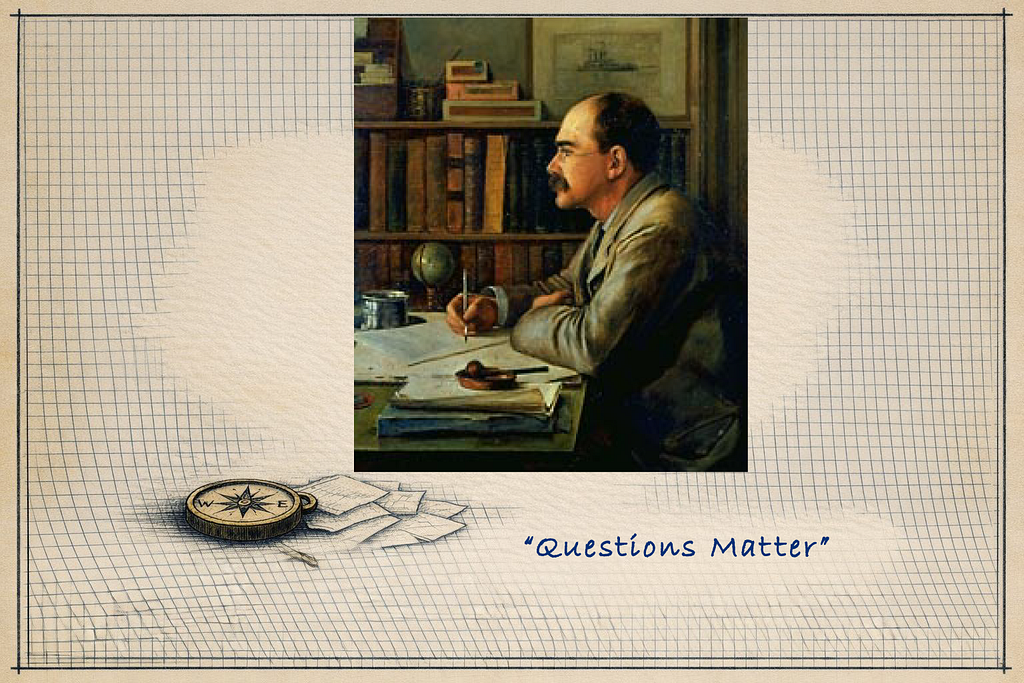
Rudyard Kipling wrote:
I keep six honest serving-men (They taught me all I knew); Their names are What and Why and When And How and Where and Who.
Increasingly I wonder whether our most valuable capability may lie in asking better questions.
Questions about:
purpose,
outcomes,
assumptions,
consequences,
trade-offs,
values.
Questions that no model can answer independently because they depend upon human priorities.
The quality of our future systems may depend less on the sophistication of our answers and more on the quality of our questions.
We Have Been Here Before
Looking back across my own experience, I am struck by how often the same challenge has appeared in different forms.
Publishing.
Communications.
Brand development.
Marketing.
Podcasts.
Health data.
Public services.
Digital transformation.
Information management.
At first glance these seem like different disciplines.
Yet each has involved the same underlying task:
Helping people make sense of complexity.
Sometimes through stories.
Sometimes through conversations.
Sometimes through data.
Sometimes through systems.
The tools differ.
The challenge remains remarkably similar.
Stories Matter
One lesson from communications and storytelling is that people rarely make sense of the world through information alone.
Facts matter.
Evidence matters.
Data matters.
But understanding often emerges through narrative.
Stories provide context.
Stories connect events.
Stories help us recognise relationships.
Stories help us understand consequences.
This may be one reason why literature continues to offer useful insights in an age of AI.
The Wizard of Oz.
King Lear.
Gulliver’s Travels.
They are not data sets.
They are ways of thinking.
Ways of understanding.
Ways of asking questions.
Human in the Loop
We often talk about keeping humans “in the loop”.
I sometimes wonder if that phrase understates the issue.
Humans do not simply supervise the system.
Humans provide many of the things that give the system meaning.
Purpose.
Context.
Judgement.
Values.
Accountability.
Responsibility.
The challenge is not merely ensuring that a human approves a decision.
The challenge is ensuring that human understanding remains connected to action.
Context as a Human Strength
One of the most important lessons I have learned through work involving communities, health, public services and organisations is that context changes everything.
A statistic can be accurate and still be misleading.
A recommendation can be logical and still be inappropriate.
A decision can be efficient and still be wrong.
Context explains why.
Humans remain remarkably good at:
recognising nuance,
understanding relationships,
navigating ambiguity,
appreciating history,
interpreting circumstances.
These capabilities become more important, not less, as systems become more capable.
Meaning Matters
Artificial Intelligence can identify patterns.
It can recommend actions.
It can generate convincing outputs.
But it does not determine what matters.
Humans do.
We decide:
what outcomes are desirable,
what success looks like,
what costs are acceptable,
what risks we are willing to take,
what responsibilities we hold towards one another.
These are not technical questions.
They are human questions.
A Different Kind of Expertise
Perhaps the future values a different kind of expertise.
Not expertise built around possessing information.
But expertise built around:
making sense of complexity,
bringing different perspectives together,
creating shared understanding,
connecting knowledge to action,
helping others ask better questions.
The challenge may not be competing with increasingly capable systems.
The challenge may be becoming better stewards of meaning.
Looking Ahead
The first question in this series came from The Wizard of Oz:
What lies behind the curtain?
The second came from King Lear:
Do we understand what matters?
The third came from Gulliver’s Travels:
Why are we doing this?
And perhaps they all lead here.
Not to a question about AI.
But to a question about ourselves.
Final Reflection
As intelligence and agency become increasingly abundant, I find myself asking:
What should I learn?
What responsibilities should I hold?
What role should I play?
Perhaps the same questions apply to all of us.
Because the future may not belong to those who merely know the answers.
It may belong to those who ask the questions that matter.
Next in the series:
People, Organisations, Places and Context
Building Shared Understanding in a Complex World
About the author
David Eccles is a co-founder of Wallscope, based in Edinburgh, Scotland. He writes about AI, organisational knowledge, interoperability, shared context and public-sector transformation, exploring how organisations can turn fragmented information into actionable knowledge.
What Is My Role? was originally published in Wallscope on Medium, where people are continuing the conversation by highlighting and responding to this story.
This is the second in a series of reflections exploring capability, understanding, purpose, context and the human role in an age of AI.
We Have Never Had More Information
We live in an age of abundance.
More data.
More dashboards.
More reports.
More analytics.
More notifications.
More insights.
And increasingly, more AI-generated summaries of all of the above.
Yet despite this explosion of information, many organisations continue to struggle with decision-making.
Communities still face complex challenges.
Public services still wrestle with difficult trade-offs.
Leaders still make mistakes.
It is tempting to assume that the answer is more information.
But what if that isn’t the problem?
What if the real challenge is understanding?
King Lear’s Tragedy
In Shakespeare’s King Lear, the ageing king decides to divide his kingdom between his three daughters.
Before doing so, he asks each to declare how much they love him.
Two daughters provide extravagant declarations.
One daughter, Cordelia, refuses to flatter him.
Lear mistakes performance for truth.
He rewards those who tell him what he wants to hear and rejects the person who is speaking honestly.
The tragedy that follows is not caused by a lack of information.
Lear is surrounded by information.
Advice.
Evidence.
Opinions.
Declarations.
Warnings.
The tragedy emerges because he misunderstands what matters.
A Reflection
Having information and understanding information are not the same thing.
And understanding does not automatically lead to wisdom.
Data Is Rarely the Problem
One lesson I have learned repeatedly through work spanning public services, health data, communities and information management is that the problem is seldom a lack of data.
In many cases:
the data already exists,
the reports already exist,
the systems already exist,
the evidence already exists.
Yet people still struggle to develop a common understanding of what is actually happening.
Different teams see different parts of the picture.
Different organisations use different language.
Different systems describe the same issue in different ways.
Everyone may be looking at the same reality.
Yet drawing different conclusions.
A Lesson From Public Services
One of the most valuable lessons I have encountered through work involving children, families and communities was surprisingly simple.
The important question was not:
What data do we hold?
It was:
What matters?
That sounds subtle.
But it changes everything.
Instead of beginning with systems and datasets, the conversation begins with people.
Children.
Families.
Experiences.
Relationships.
Outcomes.
Only then does data become useful.
Because data gains meaning through context.
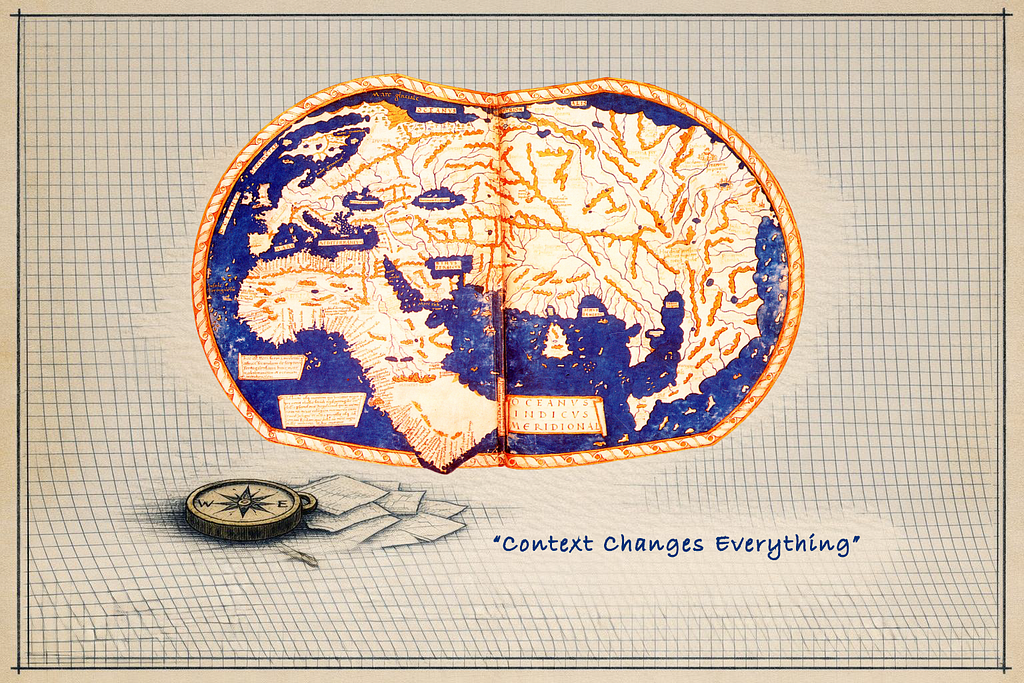
Context Changes Everything
Consider a simple statement:
Household income: £18,000
Useful information.
But incomplete.
Now add context.
A family of four.
A rural location.
Limited public transport.
Long travel distances.
High childcare costs.
Seasonal employment.
Restricted access to services.
The meaning changes entirely.
The number is the same.
The understanding is different.
Data tells us what.
Context helps us understand why.
Understanding helps us decide what to do next.
People, Organisations, Places and Context
Increasingly I find myself thinking about four interconnected elements.
People
Individuals.
Families.
Communities.
Citizens.
Practitioners.
Organisations
Councils.
Health Boards.
Charities.
Businesses.
Government agencies.
Places
Neighbourhoods.
Towns.
Cities.
Rural communities.
Regions.
Context
Relationships.
History.
Needs.
Services.
Constraints.
Opportunities.
Understanding emerges from the interaction between all four.
Remove one and the picture becomes distorted.
Information Without Understanding
King Lear’s mistake feels surprisingly modern.
It wasn’t a lack of information that caused the problem.
It was the inability to distinguish signal from noise.
Truth from performance.
Meaning from appearance.
Today’s organisations face similar risks.
We can become obsessed with:
metrics,
dashboards,
reports,
indicators,
AI-generated summaries,
while forgetting to ask a more fundamental question:
Do we truly understand what we are looking at?
A Question Worth Holding
In an age when information is increasingly abundant, does understanding become more valuable?
Understanding Is a Shared Activity
Understanding rarely happens in isolation.
It emerges through conversation.
Through challenge.
Through different perspectives.
Through experience.
This is particularly true when problems cross organisational boundaries.
Health.
Poverty.
Housing.
Education.
Community wellbeing.
No single organisation owns the whole picture.
No single dataset explains it.
No single perspective resolves it.
Understanding becomes something we build together.
Looking Ahead
If The Wizard of Oz warns us not to mistake capability for wisdom…
then King Lear reminds us not to mistake information for understanding.
But understanding alone is not enough.
Another question remains.
Even if we understand a problem perfectly:
Why are we trying to solve it?
That question takes us to another traveller.
Jonathan Swift’s Gulliver’s Travels.
And the strange inventors of the Academy of Lagado.
Final Reflection
Perhaps the challenge of the AI age is not producing more information.
Perhaps it is developing better understanding.
Because without understanding, even abundant information can still lead us astray.
Next in the series:
Gulliver’s Travels and the Purpose of Innovation
Are We Solving Important Problems or Simply Building Clever Things?
About the author
David Eccles is a co-founder of Wallscope, based in Edinburgh, Scotland. He writes about AI, organisational knowledge, interoperability, shared context and public-sector transformation, exploring how organisations can turn fragmented information into actionable knowledge.