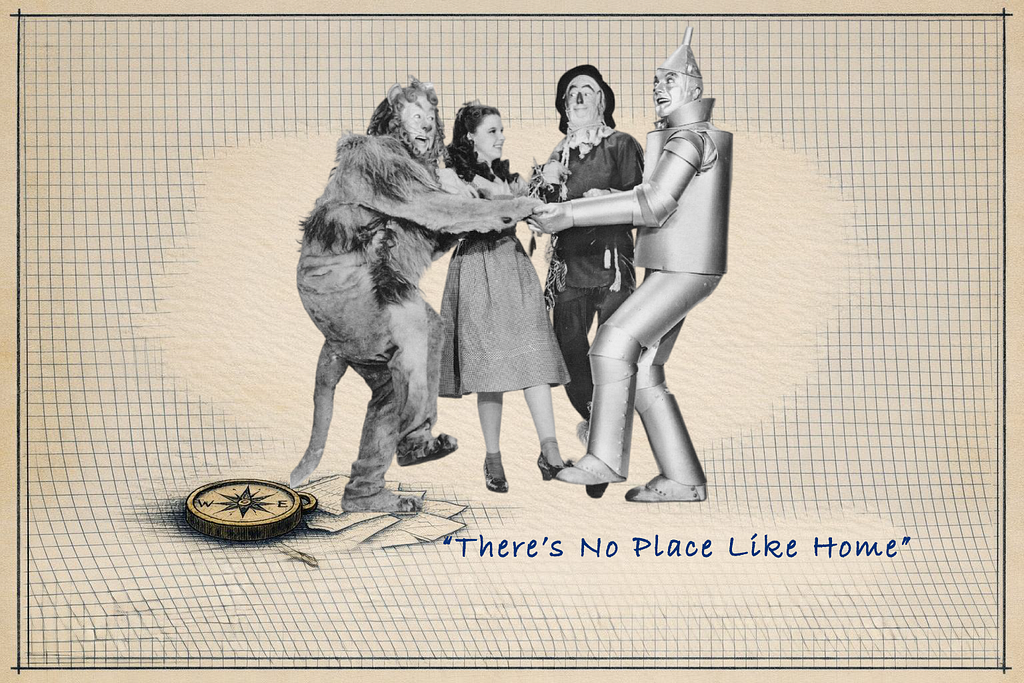
AI Reveals the Cracks

Most conversations about AI focus on capability — what a model can do, how accurate it is, or how much work it might automate. However, one of the most revealing things we’ve seen is that AI often behaves like an organisational diagnostic long before it becomes an automation tool.

AI reveals these cracks because it exposes parts of the organisation that were never fully captured or maintained. A business rule that only exists in someone’s head, a process held together by a workaround, or a decision whose rationale was never written down — all of these technically exist, but the context that makes them understandable and reusable has disappeared. These issues rarely appear in presentations or capability demos, but they can determine whether AI creates lasting value.

As organisations introduce AI, it becomes easier to execute tasks and generate outputs. What doesn’t automatically improve is shared understanding. Teams still need clarity about objectives, governance still needs to function, evidence still needs to be trusted, and learning still needs to be retained.

In that sense, AI can increase capacity far faster than it increases capability. That may explain why organisations using similar technologies often achieve very different outcomes. Many AI initiatives end up exposing the same underlying weaknesses: unclear ownership, missing context, fragile governance, fragmented understanding, and learning that isn’t preserved. The cracks were already there; AI simply makes them harder to ignore.

Once those cracks have been exposed, organisations can patch them up and move on, or treat them as indicators of where understanding is breaking down and where decisions are being made without the appropriate context. In this sense, identifying the gaps is an opportunity to fix the foundations that shape how decisions are made.

Ultimately, the cracks point to the absence of organisational memory. Without connected evidence, rationale and learning, AI meets the same fragmentation that people do. With those connections in place, it can navigate understanding rather than disconnected information.

That’s why we’re building VeriNote: to help organisations strengthen the foundations that AI depends on by connecting evidence, context, decisions and learning into a durable organisational memory. 

The Organisational Memory Problem

Exploring linked data, knowledge graphs, metadata, interoperability, and connected information ecosystems.

Most organisations do not lack information. They have reports, documents, dashboards, emails, meeting notes, policies, spreadsheets, systems and databases… 

Yet the same questions keep reappearing:

  • Why was this decision made?
  • Who approved it?
  • What evidence supported it?
  • Why did we choose this option rather than another?
  • What did we learn last time?
  • Where is that information stored?

The problem is rarely a lack of information, but that understanding becomes fragmented.

Information Is Not Understanding

Information exists in many places:

  • A report may contain evidence
  • A meeting may contain discussion
  • An email may contain a key decision
  • A document may contain an approval
  • A dashboard may contain performance data

Individually, each has value. Collectively, they often fail to tell the story. Without context, organisations are left with fragments rather than understanding.

The Cost of Lost Understanding

When understanding is lost, organisations experience familiar symptoms:

  • Decisions are revisited repeatedly
  • Work is duplicated
  • Lessons must be rediscovered
  • Knowledge becomes dependent on individuals
  • New staff struggle to understand historical decisions
  • Governance becomes difficult to demonstrate.

Many organisations lose reasoning before they lose knowledge. People may remember what was decided, but few remember why.

Wallscope’s Technical Director Ian Allaway explains how these issues are encountered in practice: “Across many organisations we’ve worked with, siloed data creates significant challenges for decision-making and organisational efficiency. Valuable information is often held in separate teams, systems and databases, with limited visibility of what data exists, where it is held, or how it can be used. This fragmentation makes it difficult to bring the right information together, resulting in duplicated effort, missed opportunities and decisions made without the full context of the available evidence.“

AI Makes This More Visible

Artificial Intelligence changes the scale of the challenge. AI can help organisations find information, analyse documents and generate answers. However, it cannot recover understanding that was never preserved. If the evidence, assumptions, rationale and decisions were never connected, AI simply encounters the same fragmentation that people do. 

In many cases,  AI does not create organisational capability. It reveals whether that capability already exists.

From Information to Organisational Memory

Organisational memory is not a document repository. It is the ability to preserve and reuse understanding over time. It connects the elements that matter:

Question → Evidence → Observation → Interpretation → Decision → Outcome → Learning

When these elements remain connected, organisations can reconstruct decisions, demonstrate accountability, learn from experience and improve future judgement.

The Next Competitive Advantage

For many years, organisations focused on collecting information. Today, information is abundant, and the emerging challenge is preserving understanding.

As AI becomes more capable, organisations that can retain context, evidence, rationale and learning may gain an enduring advantage.

VeriNote is being developed around this idea: helping organisations preserve and reuse understanding by connecting evidence, context, decisions and learning within a structured organisational memory system.

Wallscope on Medium

Wallscope publishes articles on Medium exploring AI, knowledge management, knowledge graphs, interoperability, digital transformation, public value, in Scotland and beyond.

Wallscope – Medium Insights from the Wallscope team on AI, open standards, interoperability, information management and building fairer digital futures across Scotland’s public sector and communities. – Medium

  • Shared Understanding in an Age of AI

    Why Understanding May Become More Valuable Than IntelligenceCreating fairer futures starts with shared understanding — connecting data, people and action.This is the sixth and final article in a series exploring capability, understanding, purpose, context and the human role in an age […]

  • People, Organisations, Places and Context: Building Shared Understanding for Fairer Futures

    Building Shared Understanding in a Complex WorldContext chages everythingThis is the fifth in a series of reflections exploring capability, understanding, purpose, context and the human role in an age of AI.The World Does Not Arrive in Neat CategoriesIn previous articles, I explored three […]

  • What Is My Role? Human Purpose, Learning and Leadership in an Age of AI

    Human Purpose in an Age of Increasingly Capable AIQuestions matterThe Question I Keep Returning ToAfter all the discussions about AI, agents, automation and innovation, I find myself returning to a much simpler question.Not:What will AI become?But:What will we become?Every week brings new […]

  • King Lear and the Limits of Information: Why Data Is Not the Same as Understanding

    Why Data Is Not the Same as UnderstandingThis is the second in a series of reflections exploring capability, understanding, purpose, context and the human role in an age of AI.We Have Never Had More InformationWe live in an age of abundance.More data.More dashboards.More reports.More […]

  • The Wizard Behind the Curtain: AI, Capability and Fairer Futures in Scotland

    What The Wizard of Oz Can Teach Us About AI, Capability and the Questions We Should Still Be Asking OurselvesThis is the first in a series of reflections exploring capability, understanding, purpose, context and the human role in an age of AI.Three Stories Have Been On My Mind RecentlyThree […]

  • Developing ontology tools with Grundfos

    For organisations needing to navigate ever-increasing amounts of information, ontologies are an extremely valuable tool. They allow a machine to work more like a human mind when classifying information, allowing you to navigate it smoothly. Essentially the ontology is the architecture that maps and […]

https://medium.com/wallscope

Latest Insights

/ Home » Wallscope » Public Sector

Latest Insights on Data, Clarity and Collaboration in Scotland

Wallscope shares stories, updates and practical examples from our work across Scotland’s public sector, SMEs and creative organisations — exploring how data becomes clarity and collaboration.

  • AI Reveals the Cracks
    AI Reveals the Cracks highlights how AI uncovers gaps in organisational memory, governance and shared understanding. Strengthening these foundations is key to effective AI adoption and sustainable outcomes. Wallscope helps organisations build the capability required for reliable, scalable AI.
  • The Organisational Learning Problem
    Most organisations invest heavily in training, workshops and professional development, yet the same questions keep returning: Didn’t we learn this already? Haven’t we seen this problem before? The issue may not be a lack of learning, but a failure to preserve and reuse what has been learned. Organisational learning creates value once. Organisational memory enables that value to be applied again and again. Discover why preserving context, reasoning, decisions and lessons learned may be becoming a critical organisational capability.
  • The Organisational Memory Problem
    Most organisations do not lack information. They have reports, dashboards, emails, meeting notes and databases, yet the same questions keep returning: Why was this decision made? What evidence supported it? What did we learn last time? The challenge is not information itself, but preserving the context, reasoning and understanding that give information meaning. As AI makes information easier to find, organisational advantage may increasingly depend on the ability to retain and reuse understanding over time.
  • Shared Understanding in an Age of AI
    Why Understanding May Become More Valuable Than Intelligence Creating fairer futures starts with shared understanding — connecting data, people and action. This is the sixth and final article in a series exploring capability, understanding, purpose, context and the human role in an age of AI. We Have Spoken About Capability Over the course of … Read more
  • People, Organisations, Places and Context
    Building Shared Understanding in a Complex World Context chages everything This is the fifth in a series of reflections exploring capability, understanding, purpose, context and the human role in an age of AI. The World Does Not Arrive in Neat Categories In previous articles, I explored three questions. The Wizard of Oz asked: … Read more
  • What Is My Role?
    Human Purpose in an Age of Increasingly Capable AI Questions matter The Question I Keep Returning To After all the discussions about AI, agents, automation and innovation, I find myself returning to a much simpler question. Not: What will AI become? But: What will we become? Every week brings new examples of systems … Read more
  • King Lear and the Limits of Information
    Why Data Is Not the Same as Understanding This is the second in a series of reflections exploring capability, understanding, purpose, context and the human role in an age of AI. We Have Never Had More Information We live in an age of abundance. More data. More dashboards. More reports. More … Read more
  • The Wizard Behind the Curtain
    What The Wizard of Oz Can Teach Us About AI, Capability and the Questions We Should Still Be Asking Ourselves This is the first in a series of reflections exploring capability, understanding, purpose, context and the human role in an age of AI. Three Stories Have Been On My Mind Recently Three … Read more
  • Reimagining Local Insight: A New Data Platform for Fairer Futures
    The Fairer Futures Poverty Dashboard shows how connected insight can strengthen decision-making. By bringing together previously fragmented poverty, health and community data, Dumfries & Galloway created a shared evidence base that supports collaboration, improves understanding of local need and provides a stronger foundation for future learning and action.
  • Where Knowledge Powers Action
    Information alone rarely drives better decisions. The real challenge is connecting data, context and meaning across organisational boundaries. Wallscope helps organisations unlock the value of their knowledge assets by creating shared understanding, supporting collaboration and turning fragmented information into actionable insight. Because knowledge only creates value when it can be understood and applied.
  • Building Smarter Digital Projects in Scotland
    As organisations adopt AI and digital technologies, success depends on more than technology alone. The most effective projects begin by understanding stakeholders, aligning objectives and creating a shared view of the challenge. Wallscope’s structured Discover, Define, Design and Deliver approach helps organisations turn complexity into clarity, enabling better decisions, stronger governance and more sustainable outcomes.
  • The Art of the Possible
    AI can generate content, but meaning, purpose and judgement remain fundamentally human challenges. Drawing inspiration from Edinburgh’s rich literary tradition, this article explores where we draw the line between automation and authorship, and why the future may belong to organisations that use AI to amplify human creativity rather than replace it.

Reimagining Local Insight: A New Data Platform for Fairer Futures

Reimagining Local Insight: A New Data Platform for Fairer Futures

Dumfries & Galloway faced a familiar challenge: fragmented poverty, health and community data spread across multiple systems. Working with Wallscope, the region created a Fairer Futures platform that connects information into clear, consistent local insight for Scotland’s public sector.

To address this, Dumfries & Galloway Council partnered with Wallscope to design and deliver its Fairer Futures Poverty Dashboard — a scalable, data‑driven platform aligned to the Scottish Government’s Fairer Futures approach. The dashboard brings together key datasets in one accessible location, enabling clearer insight, more consistent interpretation and a shared evidence base across services.

Fairer Futures Partnerships (FFPs) are funded by the Scottish Government and support their ambition to eradicate child poverty. They focus on place‑based, collaborative approaches that streamline services supporting priority families to improve income, health and wellbeing, and employment opportunities.

A unified view of poverty and place

The dashboard integrates data from the Department for Work and Pensions, Public Health Scotland and Scottish Government open data. Once logged in, system admins can add references to data sets of interest. Data is captured from the relevant APIs and used to provide interactive maps, charts and tables. 

Users can explore:

  • Patterns of poverty, with a focus on child poverty
  • Rural and urban classifications
  • Health and Social Care Partnership (HSCP) areas
  • Differences in outcomes across communities

By aligning datasets to common geographies such as Data Zones, the dashboard supports meaningful comparison and helps practitioners understand how need varies across local areas.

From fragmented data to connected insight

Wallscope worked with Council teams and partners to turn dispersed datasets into a single, structured evidence base. Using linked data approaches, the dashboard makes relationships clear and ensures information can be interpreted consistently.

Designed for accessibility and future readiness

By embedding meaning directly into the data, the dashboard is easy to navigate and supports a wide range of users. This structured foundation also enables future analytical and AI‑driven development.

Governance, quality and alignment

Strong governance and ongoing validation kept the solution aligned to Fairer Futures priorities. While some datasets from national sources are not yet available in dashboard‑ready formats, the platform is designed to expand as more structured data becomes accessible.

Impact

The Fairer Futures Poverty Dashboard has delivered:

  • A functional, scalable platform integrating multi‑source datasets
  • Clearer and more consistent understanding of data across services and organisations
  • Stronger place‑based insight aligned to Fairer Futures priorities
  • Reduced reliance on manual data collation and improved analytical efficiency
  • Improved accessibility and usability of data across roles and contexts
  • A future‑ready data foundation supporting ongoing development and AI‑enabled analysis

You can explore the dashboard here and examine how poverty and community outcomes vary across Dumfries & Galloway.

Supporting a fairer future for Dumfries & Galloway

By bringing together previously fragmented information into a single, coherent view, the Fairer Futures Poverty Dashboard strengthens the region’s ability to understand local need and make informed, partnership‑led decisions. It represents a significant step toward a more connected, data‑driven approach to tackling poverty and improving outcomes for communities.
Learn More

Explore Wallscope

Explore Data with Wallscope | From Data to Insight

Building Understanding.

Discover connections, uncover context and turn information into insight.

Data alone rarely tells the whole story. Wallscope helps people and organisations explore information, understand relationships and develop the shared understanding needed for better decisions and better outcomes.

Data Digital Transformation Fairer Futures Five-Star Open Data Linked Data Open Data Poverty Scotland

Wallscope supports organisations who seek sustainable transformation and innovation for Fairer Futures in Scotland

Explore Wallscope

Access our core services and navigate with clarity.

Consulting and Advisory

/ Home » Wallscope » Public Sector

Consulting & Advisory for Scotland’s Public Sector

Data tells the story of your organisation. Wallscope helps Scotland’s public sector turn that story into strategic clarity through trusted consulting, open standards and visual tools that make knowledge meaningful.

Data isn’t just technical – it tells the story of your organisation. At Wallscope, we turn that story into strategic clarity for Fairer Futures across Scotland.

We help teams build trust and translate complexity into clarity, Wallscope empowers organisations in Scotland to make knowledge meaningful.

Wallscope empowers organisations to make knowledge meaningful – through open standards, visual tools, and collaborative insight.

We collaborate with organisations to build trust, enhance operational efficiency, and foster long-term resilience through intelligent, connected data strategies.

Why this matters in practice

Many organisations generate valuable insight through programmes, initiatives and collaboration — but this insight is often lost as work moves into delivery.

As a result, teams repeat effort, struggle to demonstrate impact, and find it difficult to scale what works. The challenge is rarely a lack of ideas, but a lack of continuity in how knowledge is carried forward.

Structured Consulting and Delivery

Wallscope supports organisations in translating strategic goals into actionable digital outcomes:

  • Auditing & Analysis Assessing existing data sources, formats, and infrastructure to uncover insights and identify gaps
  • Interface and Visualisation Design Crafting dashboards and visual tools that make complex data understandable, measurable and impactful
  • Implementation Planning Mapping clear milestones, timelines and success metrics to guide smooth and scalable delivery
Wallscope empowers organisations in Scotland to make knowledge meaningful

Whether you’re a local start-up, public sector organisation or community-led enterprise – let’s shape practical digital solutions together.

Compliance and Standards Support

Promoting sustainable practices through regular reviews and updates that keep pace with technological and policy changes in Scotland

Standards Alignment

Supporting the adoption of recognised frameworks and open standards to improve data interoperability and transparency.

Policy Integration

Designing systems and processes that align with internal governance policies and external regulations.

Risk Mitigation

Enhancing data security, accessibility, and auditability to reduce compliance risks.

Continuous Improvement

Promoting sustainable practices through regular reviews and updates that keep pace with technological and policy changes.

Research and Futureproofing

Semantic data modelling for long-term adaptability alongside open-source tech aligned with international data standards.

Ready to turn insight into impact?
Partner with Wallscope to unlock clarity, streamline operations, and futureproof your strategy.
Schedule a discovery call.


At Wallscope we believe that knowledge should be accessible to all. Our aim is to empower organisations to navigate and link ever-increasing volumes of information, and to present this in an understandable and engaging way.