

What The Wizard of Oz Can Teach Us About AI, Capability and the Questions We Should Still Be Asking Ourselves
This is the first in a series of reflections exploring capability, understanding, purpose, context and the human role in an age of AI.
Three Stories Have Been On My Mind Recently
Three stories from very different times.
The Wizard of Oz.
King Lear.
Gulliver’s Travels.
At first glance, they have little in common.
Yet each explores a question that feels increasingly relevant as we enter an age of Artificial Intelligence.
The Wizard of Oz asks:
What lies behind the curtain?
King Lear asks:
Do we truly understand what matters?
Gulliver’s Travels asks:
Why are we doing this in the first place?
This article begins with the first of these questions.
The Wizard of Oz: Looking Behind the Curtain
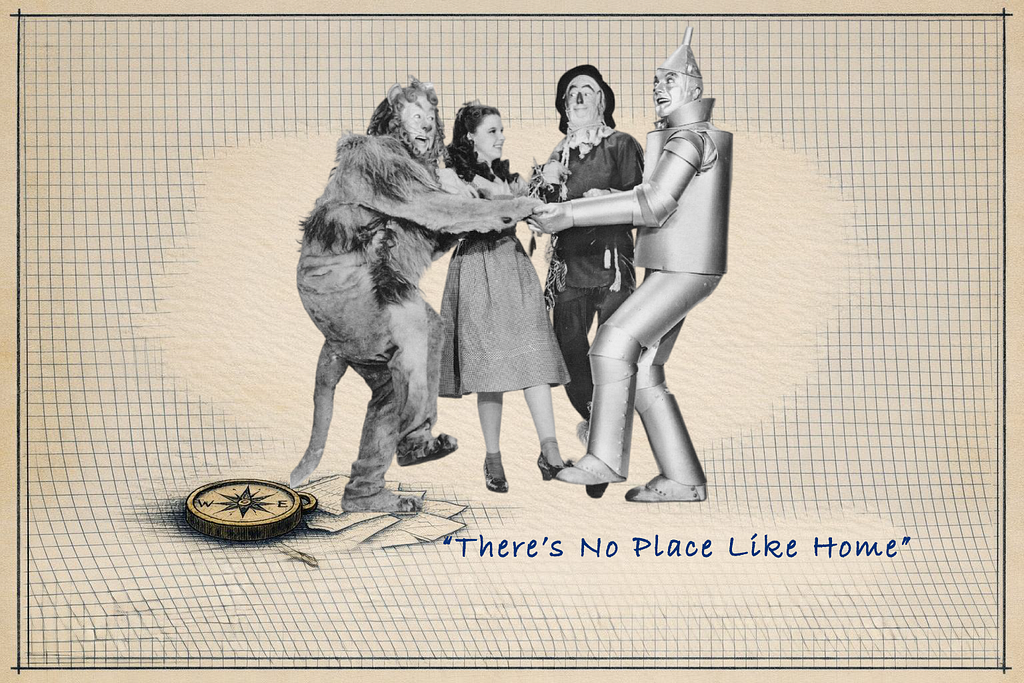
In The Wizard of Oz, Dorothy and her companions travel in search of wisdom, courage and purpose.
The mysterious Wizard appears all-powerful.
Only later do they discover a figure operating machinery behind a curtain.
Smoke.
Lights.
Effects.
Amplification.
The Wizard is not what he appears to be.
And yet, despite this revelation, the story is not really about deception.
It is about something much more interesting.
The qualities the travellers were searching for did not originate with the Wizard at all.
The Scarecrow sought intelligence.
The Tin Man sought compassion.
The Lion sought courage.
Dorothy sought her way home.
What they eventually discovered was that these qualities were not hidden inside a machine.
They emerged through experience, relationships and understanding.
The Machinery Behind Today’s Curtain
Much of today’s conversation about AI feels strangely familiar.
We are fascinated by:
- larger models,
- increasingly capable agents,
- bigger context windows,
- more powerful computing infrastructure,
- automation at unprecedented scale.
And rightly so.
These are remarkable achievements.
Yet I sometimes wonder whether we risk becoming too fascinated by the machinery behind the curtain.
The question dominating many discussions is:
What can these systems do?
A fair question.
But perhaps not the most important one.
A Question Worth Holding
If increasingly capable systems can generate answers, recommendations and actions:
What questions should humans be asking?
We Were Told Data Was the New Oil
For years we were told:
Data is the new oil.
It’s a useful metaphor.
But perhaps not for the reasons people intended.
Oil has no intrinsic purpose.
Its value comes from what we choose to do with it.
We can use it to power transport.
Manufacture plastics.
Heat buildings.
Every choice produces different outcomes and different consequences.
Some benefits remain visible.
Some costs become externalised and borne elsewhere.
The important questions are therefore not about the oil itself.
They are about purpose.
What are we trying to achieve?
Who benefits?
Who bears the costs?
What consequences are we willing to accept?
The same may increasingly be true of AI.
More capability does not automatically create better outcomes.
It simply increases our capacity to act.
Artificial Intelligence Is a Curious Phrase
The phrase itself has always intrigued me.
Artificial Intelligence suggests that intelligence somehow originates within the machine.
Yet much of what today’s systems know comes from humans.
Human language.
Human experience.
Human institutions.
Human history.
Human knowledge.
Human conversations.
Human values.
The infrastructure is becoming increasingly capable.
The ability to process information is no longer the major constraint it once was.
But greater capability does not automatically create greater understanding.
And it certainly does not create wisdom.
Capability Is Not Wisdom
This, perhaps, is the lesson I take from The Wizard of Oz.
The Wizard represents capability.
Modern AI is becoming increasingly capable.
But capability alone cannot tell us:
- what matters,
- who matters,
- which outcomes should be prioritised,
- what constitutes success,
- what consequences should concern us.
These remain deeply human questions.
The story reminds us that the answers may not be hidden behind the curtain at all.
They may lie in our ability to ask better questions.
Looking Ahead
The Wizard of Oz leaves us with a useful challenge.
As AI systems become increasingly capable, are we becoming more fascinated with what machines can do than with what humans ought to do?
That question leads naturally to another story.
Because if The Wizard of Oz asks:
What lies behind the curtain?
Then Shakespeare’s King Lear asks something even more uncomfortable:
How can we be surrounded by information and still fail to understand what matters?
That is where I will go next.
Final Reflection
Perhaps the greatest challenge of the AI age is not intelligence.
Perhaps it is understanding.
And perhaps the first step is learning to look beyond the machinery behind the curtain.
Next in the series:
King Lear and the Limits of Information
Why Data Is Not the Same as Understanding
About the author
David Eccles is a co-founder of Wallscope, based in Edinburgh, Scotland. He writes about AI, organisational knowledge, interoperability, shared context and public-sector transformation, exploring how organisations can turn fragmented information into actionable knowledge.
🌐 https://wallscope.co.uk
🔗 https://www.linkedin.com/in/davidecclesedinburgh/

The Wizard Behind the Curtain was originally published in Wallscope on Medium, where people are continuing the conversation by highlighting and responding to this story.


